Opening in a new tab

Come back to indiafoodandgifts.com to explore more Indian culture, recipes & gifts.

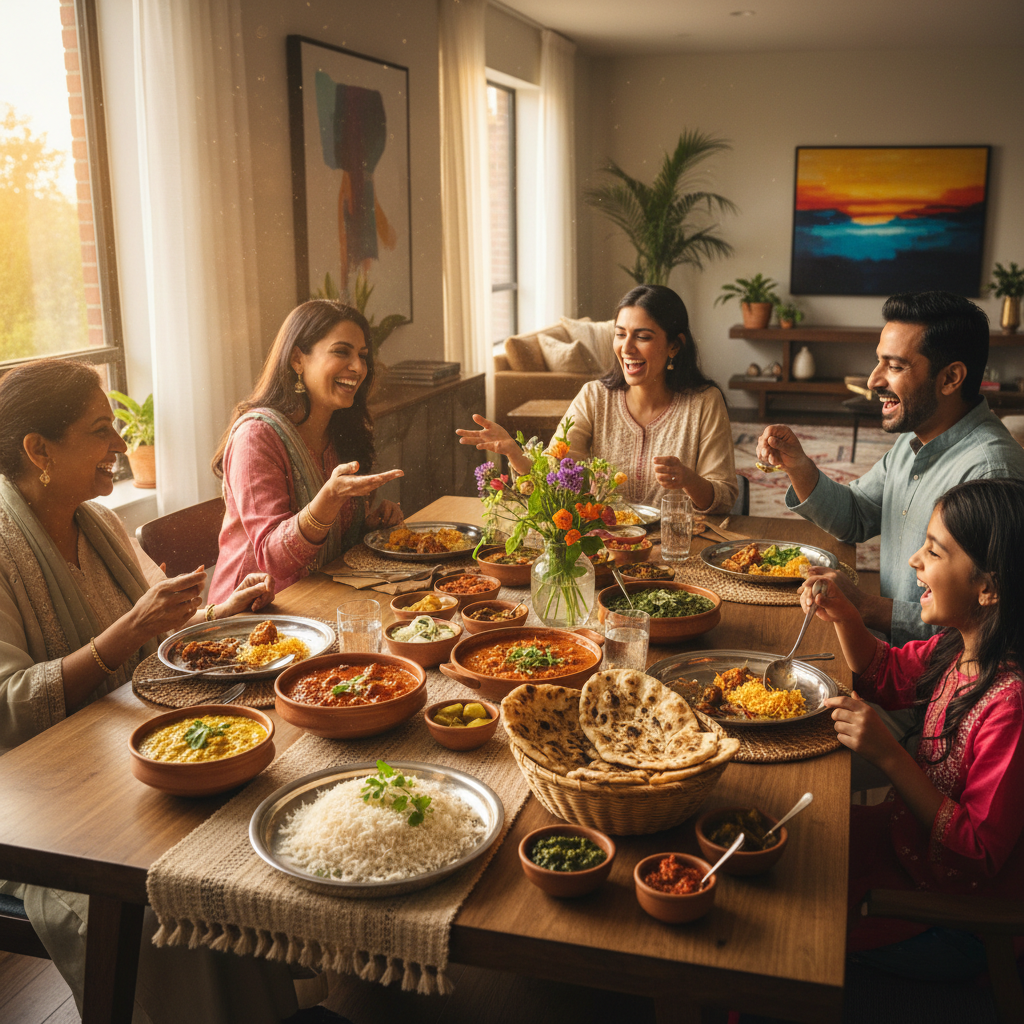
Indian family cooking together

Community Corner

Tips, recipes, cultural insights, and more — celebrating Indian heritage together.

Today's Top Recipes

All Recipes

Share Your Story

Your Recipe Belongs Here

Have a family recipe passed down through generations? A festival dish that brings everyone together? Share it with our community of Indian food lovers across 60+ countries. Every story, every recipe, every memory matters.

60+ Countries

Our community spans the globe — NRIs, food lovers, and culture enthusiasts everywhere.

Share Recipes

From grandma's dal to modern fusion — every recipe has a story worth telling.

Get Featured

The best community stories get featured on our homepage and social channels.

Our Favourite Recipes

Indian cuisine is one of the most diverse and complex in the world, shaped by thousands of years of history, geography, and cultural exchange. From the lentil fields of Punjab to the spice gardens of Kerala, every dish tells a story. These recipes are staples of the Indian home kitchen — simple enough for weeknights, meaningful enough for celebrations.

Food is the most portable form of culture. When Indian families emigrated to the United States, the United Kingdom, Canada, and Australia, they carried their recipes with them — not written down, but memorized through years of watching mothers and grandmothers cook. A dal tadka made in a Boston apartment smells exactly like one made in a Delhi kitchen, and that continuity is not accidental. It is an act of preservation.

For the second and third generation of the diaspora, learning to cook Indian food is often the first step toward reconnecting with a heritage they grew up adjacent to but never fully inhabited. The recipes here are written with that reader in mind — someone who may have eaten these dishes their whole life but never made them, or someone who married into an Indian family and wants to understand what they are eating. Each recipe includes enough cultural context to explain not just the how, but the why: why you bloom the spices in ghee at the end, why the lentils need to be soaked, why the chai is simmered rather than steeped. The technique carries the tradition.

Recipe20 min

Classic Dal Tadka

Dal Tadka is the soul food of India — a humble yellow lentil dish elevated by a sizzling tempering of cumin seeds, garlic, dried red chilies, and ghee poured over the top at the last moment. It is eaten in homes from Kashmir to Kanyakumari, served over steamed basmati rice or scooped up with fresh roti. The word 'tadka' refers to the tempering technique, which releases the essential oils of the spices and transforms a simple dal into something deeply aromatic and satisfying. A bowl of dal tadka is comfort, memory, and nourishment all at once.

Recipe10 min

Masala Chai at Home

Masala chai is more than a beverage — it is a daily ritual in millions of Indian households. The word 'masala' means spice blend, and every family has their own version passed down through generations. The base is strong black tea simmered with whole milk, sweetened with sugar, and infused with a warming blend of cardamom, fresh ginger, cinnamon, cloves, and black pepper. The result is a deeply fragrant, slightly spicy, creamy cup that warms you from the inside out. Brewing it properly takes patience — the spices need time to bloom in the milk before the tea is added.

Recipe35 min

Chana Masala

Chana Masala is one of the most beloved vegetarian dishes in North Indian cooking — a bold, tangy chickpea curry built on a foundation of onions, tomatoes, and a complex spice blend that includes coriander, cumin, garam masala, amchur (dried mango powder), and chaat masala. The chickpeas absorb the sauce beautifully over a slow simmer, becoming tender and deeply flavored. It is a staple of Punjabi dhabas (roadside eateries) and is equally at home on a weeknight dinner table or at a festive gathering. Serve it with bhatura, puri, or steamed rice.

Helpful Tips

Living with Indian culture means knowing how to care for the things that carry it — the spices in your kitchen, the sarees in your wardrobe, the cricket bat in the garage. These practical tips come from years of experience sourcing, selling, and using authentic Indian products.

There is a particular kind of frustration that comes from buying something authentic and then watching it degrade because you did not know how to care for it. A silk saree that loses its sheen after one wash. A masala dabba full of spices that have gone flat and dusty. A cricket bat that cracks on its first serious use because it was never knocked in. These are not failures of the product — they are failures of knowledge, and they are entirely preventable.

The tips in this section come directly from the experience of sourcing, selling, and living with authentic Indian products for over fifteen years. They are the answers to the questions customers ask most often — how to store turmeric without staining everything, how to fold a saree so it does not crease, what weight cricket bat is right for a twelve-year-old just starting out. None of this knowledge is secret or complicated, but it is the kind of thing that gets passed down in families and communities, and that the diaspora sometimes misses when they are far from those networks. Consider this a small attempt to fill that gap.

Tip

How to Store Indian Spices

Indian spices are living ingredients — their potency comes from volatile essential oils that degrade quickly when exposed to heat, light, moisture, or air. The best way to preserve them is in airtight glass or stainless steel containers stored in a cool, dark cabinet away from the stove. Whole spices like cumin seeds, cardamom pods, and cinnamon sticks last far longer than ground versions — up to three years versus six to twelve months for powders. A traditional masala dabba (spice tin) with individual compartments is the gold standard for keeping your most-used spices fresh and accessible. Label everything with the purchase date so you always know what needs replacing.

Tip

Caring for Your Silk Saree

A pure silk saree is one of the most precious garments in Indian culture — some are heirlooms passed down through generations, woven with real gold or silver zari thread. Caring for one properly means never machine washing or dry cleaning with harsh chemicals. Hand wash gently in cold water with a mild, pH-neutral detergent, supporting the full weight of the wet fabric to avoid stretching. Dry flat in the shade — never in direct sunlight, which fades the color and weakens the fibers. Store folded in a clean cotton muslin cloth, not plastic, which traps moisture and encourages mildew. Refold along different lines every few months to prevent permanent crease marks.

Tip

Choosing the Right Cricket Bat

Cricket bats are not one-size-fits-all — the right choice depends on your playing level, the pitch conditions, and your personal batting style. English willow is the premium choice for serious players: it is lighter, more responsive, and performs better on hard, fast pitches. Kashmir willow is denser and more durable, making it ideal for practice sessions and recreational play on rough surfaces. When selecting a bat, pay close attention to the weight — most adult players prefer between 2 lb 7 oz and 2 lb 10 oz — and the grip size, which should allow your fingers to wrap comfortably without straining. Always knock in a new bat with a mallet before use to compress the fibers and prevent cracking.

Festival Guide

India's festival calendar is one of the richest in the world — a year-round celebration of faith, family, harvest, and history shared across religions, regions, and generations. For the Indian diaspora living abroad, these festivals are a vital thread connecting them to home. Whether you are celebrating in Mumbai or Massachusetts, the traditions remain the same.

Festivals are how cultures transmit themselves across time and distance. In India, the festival calendar is not a list of public holidays — it is the architecture of the year, the framework around which family life, community bonds, and spiritual practice are organized. Diwali is not just a night of fireworks; it is weeks of preparation, cleaning, cooking, gift-giving, and prayer. Holi is not just colored powder; it is a sanctioned moment of joy and renewal, when people of all ages and backgrounds come together to celebrate the arrival of spring.

For the Indian diaspora, maintaining these festivals abroad requires deliberate effort. There is no week off work for Diwali in most American cities, no neighborhood-wide Holi celebration unless the community organizes one. The ingredients for festival sweets have to be sourced from specialty stores. The traditional clothes have to be ordered months in advance. And yet, diaspora communities do this — consistently, generation after generation — because the festivals are not optional. They are the mechanism by which Indian identity is passed from parents to children, from grandparents to grandchildren, across the enormous distance of immigration. The guide below is a starting point for anyone who wants to celebrate these occasions with more depth and understanding.

Diwali

The Festival of Lights — a five-day celebration of light over darkness, good over evil. Homes are decorated with clay diyas, colorful rangoli, and strings of lights. Families exchange sweets, worship Goddess Lakshmi for prosperity, and light fireworks at night. For the diaspora, Diwali is the most important occasion to reconnect with cultural roots and share traditional gifts with the next generation.

Holi

The Festival of Colors marks the arrival of spring and the victory of good over evil — celebrated with an explosion of colored powder, water balloons, music, and dancing. It is one of the most joyful and inclusive festivals in India, bringing together people of all ages and backgrounds in a shared celebration. The night before, bonfires called Holika Dahan are lit to symbolize the burning of evil. Traditional sweets like gujiya and thandai are shared among friends and neighbors.

Eid

Eid al-Fitr marks the end of Ramadan — a day of gratitude, communal prayer, feasting, and giving. Families dress in new clothes, attend morning prayers, and gather for elaborate meals featuring biryani, seviyan, and an array of sweets. The tradition of Eidi — giving gifts or money to children — is a beloved part of the celebration. For Muslim communities in the diaspora, Eid is a time to honor faith and share the spirit of generosity with neighbors of all backgrounds.

Navratri

Nine nights of devotion to Goddess Durga in her nine divine forms — observed with Garba and Dandiya Raas folk dances performed in circles to devotional music. Participants dress in traditional chaniya choli and kediyu. Fasting, prayer, and wearing specific colors on each day are central traditions. For Indian communities abroad, Navratri events have become major cultural gatherings that bring thousands together to celebrate shared heritage.

Christmas

Christmas is celebrated with warmth and joy across India's Christian communities — particularly in Goa, Kerala, and the northeastern states — and has become a beloved part of the broader Indian cultural calendar. Churches are decorated with stars and nativity scenes, families gather for midnight Mass, and homes fill with the aroma of traditional sweets like rose cookies, plum cake, and neureos. For Indian Christians in the diaspora, Christmas is a time to blend the familiar traditions of home with the festive spirit of their adopted country, sharing the season's generosity with friends and neighbors of every faith.

Ugadi

Ugadi marks the Telugu and Kannada New Year — a fresh beginning celebrated with the ritual preparation of Ugadi Pachadi, a chutney made from six distinct flavors: neem flowers, jaggery, raw mango, tamarind, green chili, and salt. Each ingredient represents one of life's experiences — bitterness, sweetness, sourness, and more — reminding celebrants that the year ahead will hold all of them. Homes are decorated with mango leaf torans, new clothes are worn, and families gather to hear the Panchanga Sravanam, a reading of the year's astrological forecast. For Telugu and Kannada communities in the diaspora, Ugadi is a deeply personal new year rooted in the rhythms of the Deccan.

Ganesh Chaturthi

Ganesh Chaturthi celebrates the birth of Lord Ganesha — the remover of obstacles and patron of new beginnings — over ten days of devotion, music, and community celebration. Clay idols of Ganesha are installed in homes and public pandals, adorned with flowers and sweets, and worshipped with daily prayers and offerings of modak, his favorite treat. On the final day, the idols are carried in joyful processions to be immersed in rivers, lakes, or the sea. The festival is especially grand in Maharashtra, where entire neighborhoods come together. For the diaspora, Ganesh Chaturthi is a time to invoke blessings for the year ahead and celebrate the spirit of community.

Rakhi

Raksha Bandhan — known affectionately as Rakhi — is a celebration of the bond between brothers and sisters. Sisters tie a colorful thread called a rakhi around their brother's wrist as a symbol of love and protection, and brothers pledge to look after their sisters in return. The exchange is accompanied by sweets, gifts, and heartfelt wishes. In many families, the tradition extends beyond blood siblings to close friends and cousins. For the Indian diaspora, Rakhi often means mailing rakhis across continents and video calls that bridge thousands of miles — a reminder that the bond it celebrates is stronger than distance.
Live recipe content sourced from

Archana's KitchenVeg Recipes of IndiaSpice Up The CurryIndian Healthy RecipesTimes Food
indiafoodandgifts logo

Your community connection to authentic Indian flavors, gifts, and culture — proudly serving the South Asian diaspora worldwide from Massachusetts.

Our eBay Store

Browse 400+ authentic Indian products — spices, sarees, beauty, cricket, soccer, vintage watches, collectible pens, and more.

Visit Our eBay Store

© 2026 indiafoodandgifts. All rights reserved. Based in Massachusetts, USA.

eBay Top Rated Seller · In Business Since 2009 · Ships to 60+ Countries